

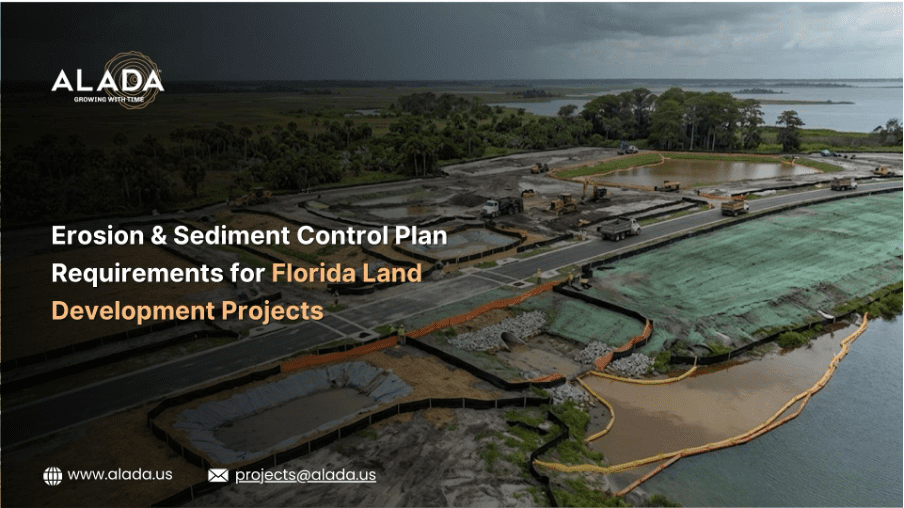
Erosion & Sediment Control Plan Requirements for Florida Land Development Projects
Florida’s rapid growth continues to drive demand for residential, commercial, and infrastructure development projects. However, with development comes the responsibility of protecting water quality, wetlands, and surrounding ecosystems from erosion and sediment runoff.
Before breaking ground, developers must ensure their projects comply with erosion and sediment control requirements established by local municipalities, water management districts, and state environmental agencies.
Failing to implement proper erosion and sediment control measures can result in project delays, permit violations, environmental damage, and costly fines.
This guide explains the key erosion and sediment control plan requirements for Florida land development projects and why proper planning is essential for successful project execution.
What Is an Erosion & Sediment Control Plan?
An Erosion and Sediment Control (ESC) Plan is a construction-site management plan designed to minimize soil erosion and prevent sediment from leaving the project site during land-disturbing activities.
The plan identifies potential erosion risks and outlines specific measures that will be implemented throughout construction to protect nearby waterways, stormwater systems, wetlands, and neighboring properties.
ESC plans are often required as part of site development permitting and stormwater management approvals throughout Florida.
Why Erosion & Sediment Control Matters in Florida
Florida’s unique environmental conditions create significant erosion challenges, including:
• Heavy rainfall events
• Coastal development areas
• Sensitive wetlands and water bodies
• Sandy and highly erodible soils
• Strict environmental regulations
Without proper controls, stormwater runoff can transport sediment into lakes, rivers, wetlands, and municipal drainage systems, negatively impacting water quality and local ecosystems.
Effective erosion and sediment control practices help developers:
• Meet regulatory requirements
• Protect natural resources
• Avoid compliance violations
• Reduce project risks
• Improve construction efficiency
Key Components of a Florida Erosion & Sediment Control Plan
1. Site Assessment and Existing Conditions
A comprehensive ESC plan begins with evaluating site characteristics, including:
• Existing topography
• Soil conditions
• Drainage patterns
• Water bodies and wetlands
• Vegetation coverage
• Property boundaries
Understanding site conditions allows engineers to identify areas most vulnerable to erosion and sediment transport.
2. Stormwater Runoff Management
Managing stormwater is one of the most critical aspects of erosion control planning.
Typical stormwater management strategies include:
• Temporary detention ponds
• Retention basins
• Diversion channels
• Swales
• Inlet protection systems
These measures help control runoff velocity and reduce sediment discharge from the construction site.
3. Perimeter Sediment Controls
Perimeter controls prevent sediment from leaving the project site and entering adjacent properties or waterways.
Common sediment control measures include:
• Silt fences
• Sediment barriers
• Fiber rolls
• Filter socks
• Construction entrances
These controls are typically installed before land disturbance begins.
4. Soil Stabilization Measures
Exposed soil is highly vulnerable to erosion during construction.
Florida ESC plans often include stabilization practices such as:
• Temporary seeding
• Permanent vegetation
• Mulching
• Sod installation
• Erosion control blankets
• Hydroseeding
Stabilization measures reduce soil loss and improve site resilience during rainfall events.
5. Construction Phasing
Large developments are often constructed in phases to minimize disturbed areas at any given time.
Phased construction helps:
• Reduce erosion risks
• Simplify stormwater management
• Improve regulatory compliance
• Lower sediment control maintenance costs
Many permitting agencies encourage phased development strategies whenever possible.
6. Inspection and Maintenance Procedures
An erosion control plan is only effective if controls are regularly inspected and maintained.
Typical maintenance requirements include:
• Routine site inspections
• Repairing damaged silt fences
• Removing accumulated sediment
• Stabilizing exposed soils
• Updating control measures as site conditions change
Proper maintenance ensures compliance throughout the project lifecycle.
Common Erosion Control Challenges in Florida Land Developmen
Developers frequently encounter challenges such as:
Intense Rainfall Events
Florida storms can generate large volumes of runoff in a short period, overwhelming inadequate erosion control systems.
Wetland Protection Requirements
Projects located near wetlands often require additional safeguards and regulatory review.
Fast-Paced Construction Schedules
Tight project timelines can lead to erosion control measures being overlooked or improperly maintained.
Changing Site Conditions
As grading and construction progress, erosion risks may evolve and require plan adjustments.
Best Practices for Florida Developers
To improve compliance and project success, developers should:
✔ Conduct thorough site evaluations
✔ Design erosion controls early in the planning process
✔ Coordinate with local permitting agencies
✔ Implement stormwater management strategies
✔ Perform routine inspections
✔ Work with experienced civil engineering professionals
A well-prepared ESC plan not only satisfies regulatory requirements but also protects project investments and community resources.
How Alada Solutions Supports Florida Land Development Projects
At Alada Solutions, we provide comprehensive civil engineering and land development support services for projects across the United States.
Our team assists developers, engineers, and consultants with:
• Land Development Design
• Site Grading Plans
• Stormwater Management Design
• Erosion & Sediment Control Plans
• Civil Engineering Drafting Support
• Survey Drafting Services
• GIS & Geospatial Solutions
By combining technical expertise with efficient project delivery, we help clients streamline approvals, improve compliance, and keep development projects moving forward.
(FAQs)
What is an erosion and sediment control plan?
An erosion and sediment control plan is a construction-site management document that outlines measures used to prevent soil erosion and sediment runoff during land development activities.
Are erosion control plans required in Florida?
Yes. Most land development projects in Florida require erosion and sediment control measures as part of permitting and stormwater management compliance processes.
What are common erosion control measures used in Florida?
Common measures include silt fences, sediment basins, erosion control blankets, vegetative stabilization, inlet protection systems, and stormwater management facilities.
Who prepares erosion and sediment control plans?
Erosion and sediment control plans are typically prepared by civil engineers, land development consultants, and environmental professionals familiar with local and state regulatory requirements.
Why are erosion control plans important?
They help protect water quality, reduce environmental impacts, support regulatory compliance, and prevent costly construction delays or penalties.
Need Support for Your Next Florida Development Project?
Proper erosion and sediment control planning is essential for successful land development in Florida. Whether you’re preparing permit applications, designing stormwater systems, or developing construction plans, having the right engineering support can save time, reduce risk, and improve project outcomes.
Alada Solutions USDC Inc. provides reliable civil engineering drafting, land development design, and erosion control planning support to help developers navigate complex project requirements with confidence.
Get Expert Land Development Support Today
👉 Request a Project Consultation

